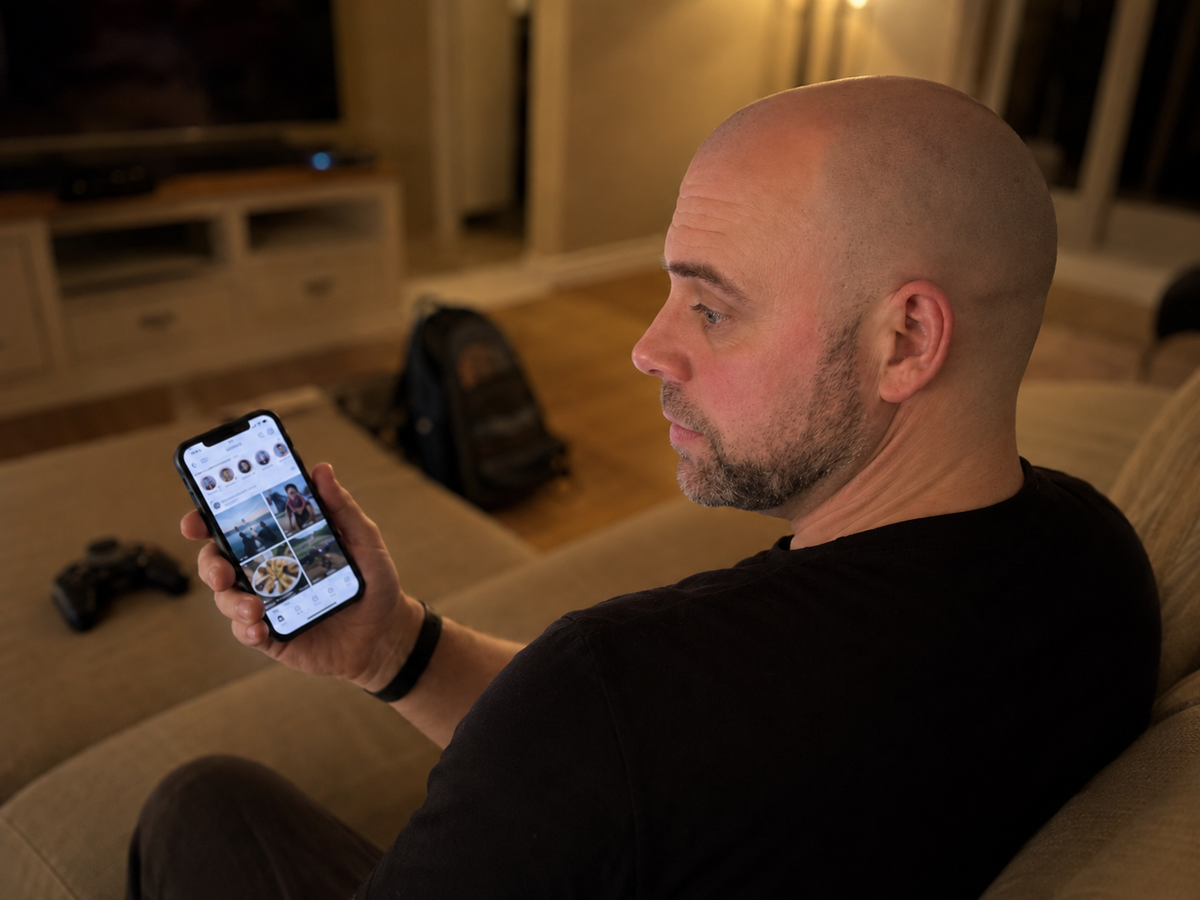
Today Sir Keir Starmer set out a plan to bar under-16s from social media, and he wants the UK version to go further than anyone has gone so far, which is why the press has already named it "Australia plus". Under-16s would be kept off TikTok, Instagram, Facebook, X, YouTube, Snapchat, Threads, Twitch, Kick and Reddit, and the "plus" is the extra reach on top of that, with curfews for older teenagers, a block on children talking to strangers inside gaming platforms, and limits on romantic or sexual Ai chatbots. It follows 116,000 responses to a public consultation, and it would come into force early next year. I think something genuinely has to change here, but I am far less sure that a ban, on its own, does what we actually want it to.
Why something has to change
You do not have to look far for the reason behind this, because in 2017 a fourteen-year-old called Molly Russell took her own life after viewing a stream of self-harm and suicide content on Instagram and Pinterest, and at the 2022 inquest the coroner reached a conclusion that should still stop anyone in their tracks, finding that she had died from an act of self-harm while suffering from depression "and the negative effects of online content". For a British coroner to put online content on the record as a cause of a child's death is extraordinary, and the platforms did not set out to cause it, but their systems did it anyway, because the thing they are built to do is hold attention and distressing content holds attention very well.
That gap between what a platform intends and what its systems actually reward is the whole problem in a single line. If you want the cultural version of the same worry, it arrived last year in "Adolescence", the Netflix drama with Stephen Graham about a thirteen-year-old boy who murders a girl in his class after being pulled into online misogyny and incel content. It is fiction, and it is careful to spread the responsibility across family, school and the internet rather than blaming a single app, but it still landed hard enough to start a national conversation and a response from Downing Street, because every parent watching recognised the bedroom, the phone and the silence.
The honest summary is that the platforms have had years to deal with this and have moved slowly, and when you ask the people who run them they point to safety features and age tools that do genuinely exist, while the harm has carried on regardless. That is why the appetite for something blunter is so easy to understand.
What "Australia plus" actually means
The model is Australia's, which barred under-16s from social media in a law that came into force in December 2025, and the UK is copying the shape of it while turning the dial further, so the additions matter as much as the headline. The curfews would limit when older teenagers can be on the apps at all, the gaming measure goes after the specific and well-evidenced danger of adults reaching children through in-game chat, and the chatbot measure is the genuinely new part, singling out romantic and sexual Ai chatbots as a sign of where the next worry already sits. Whatever you make of the ban as a whole, the government has at least noticed that the harm is no longer confined to the platforms we have spent a decade arguing about.
What Australia already shows us
The difficulty is that we can already see how this plays out, because Australia is six months ahead of us. Meta blocked more than half a million under-16 accounts in the first month, which sounds like enforcement working, until you look at what the children actually did next, because reporting since the ban suggests that more than 60% of Australian children carried on using social media regardless. They borrowed a parent's account, they used a parent's Face ID, they moved across to apps the law had not named yet such as Discord, and, in a detail that would be funny if the subject were lighter, some of them used printed mesh face masks to fool the age-estimation cameras, while a VPN will make a child in Sydney look like an adult in Toronto in about thirty seconds.
There is also a second cost that has nothing to do with teenagers at all, because to check that someone is over 16 a platform has to check everyone's age, which means adults handing over ID or a face scan to a private company. Critics in Australia called the approach grossly disproportionate, and the privacy trade-off is real, since you can believe that children need protecting and still be uneasy about building national age-verification infrastructure in order to do it.
So is it worth doing?
Put the two sides together and you get a more uncomfortable picture than either camp tends to admit, because a ban that 60% of children walk straight through is plainly not the clean fix the headlines suggest, and yet it is not nothing either. Laws change defaults and defaults change behaviour over time even when they leak, in the way that drink-driving law did not stop every drink-driver on the first day but moved the norm until the norm did the long work over a generation, and a ban that makes social media the exception rather than the assumed backdrop of a thirteen-year-old's life might just do something similar, slowly, provided it is paired with the harder work.
The harder work is the part a ban quietly lets everyone avoid, because what harmed Molly Russell was never her age, it was a recommendation system that learned what kept her watching and then fed her more of it, and you can lock under-16s out of the building while leaving that same machine running for everyone over 16, which is most of the people it affects. The real fight is over how these systems are designed, what they are allowed to optimise for, and what they ship as the default setting, none of which is settled by an age gate, so a ban like this is a reasonable floor to set as long as nobody mistakes it for the ceiling.
In part two I want to look at why social media ended up like this in the first place, because the answer is not that the people who built it were villains, and the real answer turns out to be far more useful when we come to think about Ai.
If any of this is close to home, the Samaritans are there day or night on 116 123, and for young people Papyrus runs HOPELINE on 0800 068 4141.